If you give children extra reading instruction over their summer break, they will benefit academically when they return to school.
That is the logical-sounding premise under which the Endowment and a few congregations launched the Summer Literacy Initiative 14 years ago, piloting summer literacy camps at rural United Methodist churches across North Carolina.
But instead of just hoping or presuming the four- to six-week camps would help students academically, the Endowment commissioned a series of increasingly sophisticated evaluations to test that assumption.
External evaluators hired by the Endowment began by conducting the most basic type of research: measuring students’ reading scores before the camps and then after the camps. Results were encouraging, with most students gaining two to three months of reading proficiency.
However, those “pre-post” tests could not show what would have happened if the children hadn’t been in the camps that summer. Thus, they did not definitively show that the camps caused students’ academic gains.
“We didn’t have a comparison group to know whether (the reading gains) were really different than what would have happened with no reading camp opportunity,” said Karen Manship, managing director at the American Institutes for Research (AIR) and a project evaluator for the Endowment’s Rural Church program area.
Reflecting the Endowment’s commitment to following the facts and evidence in its grantmaking, the Rural Church program area requested that AIR conduct a more sophisticated study. This time, researchers used state-level data to build a comparison group of students who did not attend the literacy camps but went to similar schools, had similar demographic characteristics and similar beginning reading scores.
Those results, compiled in 2025 and published in 2026, showed a measurable difference. On beginning-of-year reading tests at schools, students who attended summer literacy programs showed one to two months of additional learning compared to their peers who didn’t attend the programs.
“The results give us more confidence that the summer literacy programs were the factor causing students’ reading growth,” Manship said.
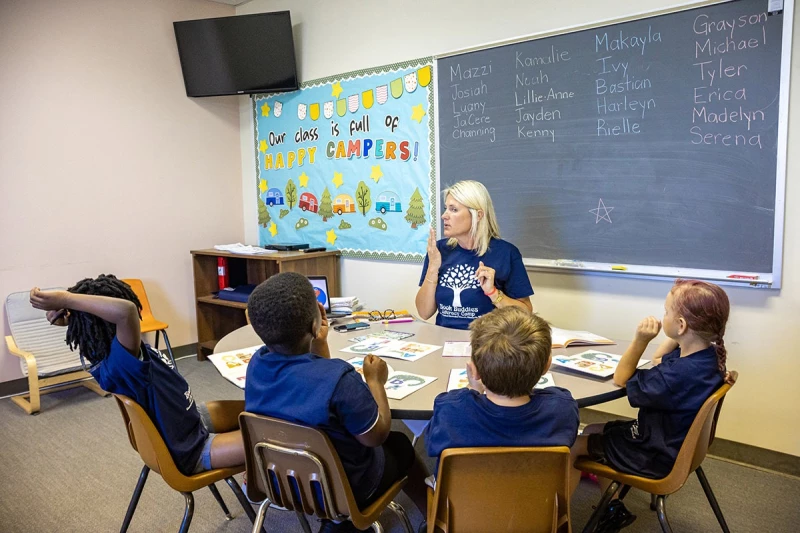
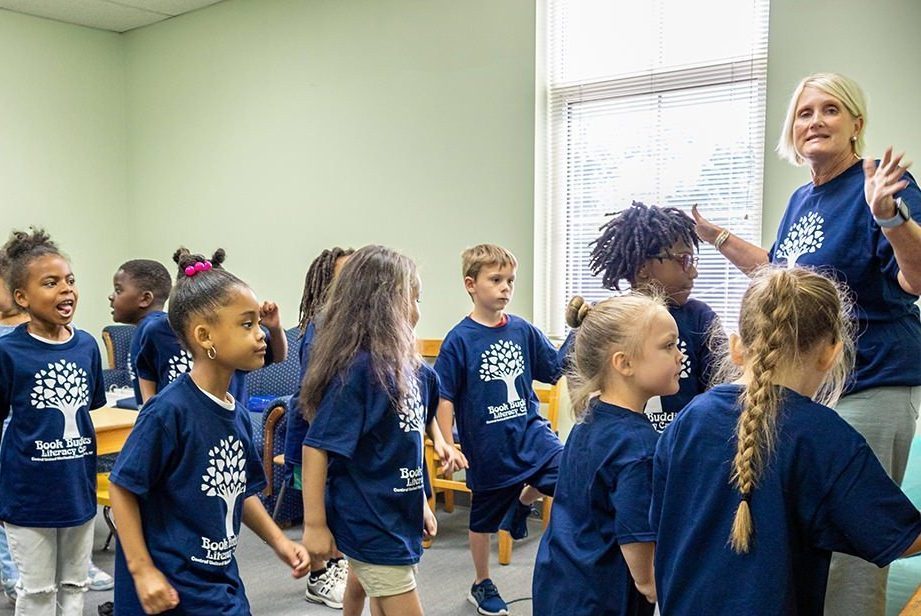
A visit to the Book Buddies Literacy Camp at Central United Methodist Church in Albemarle, N.C., showed how such growth might happen. One weekday morning, about two dozen rising first-graders gathered in the church’s Sunday school classrooms. They received small-group lessons in phonics, letter recognition, color recognition and other essential skills from certified teachers who worked hard to build proficiency and confidence.
The pastor, Rev. Dr. David Blankenberg, and the site director, Rev. Caitlin McAlhany Herlocker, said campers’ reading scores have been rising. “You wouldn’t think with four weeks it would be that big of a difference, but it’s amazing,” she said. With the small groups, “you really can focus on the kids that have gaps.”
Evaluators will next do a randomized controlled trial of the Summer Literacy Initiative, applying the gold standard of social science research methods. It could provide even stronger evidence. Robert R. Webb III, director of the Rural Church program area, expressed hope that the evidence being built around the program will help persuade state and local governments to champion more evidence-based summer literacy camps.
He quoted the Endowment’s founder, James B. Duke, who said in the Endowment’s founding document that he was trying in his philanthropy to “make provision in some measure for the needs of mankind along physical, mental and spiritual lines.”
“In order to know that we’re making provision for young readers, and to know that we’re doing that in a way that’s effective, we need the work that Karen and her team are producing,” Webb said. “This is a textbook example of how you can use data and evidence to strengthen programming and spotlight effective solutions.”
This is a textbook example of how you can use data and evidence to strengthen programming and spotlight effective solutions.

Next Grantee Feature